Blog · Guides
Do street interviews work for brands? What the results show
By the Street Interviews team · 18 November 2026 · 5 min read
Yes, street interviews work for brands when the aim is attention, recall and conversation on social media. Campaigns we have made have reached tens of millions of views, such as 47M+ for a Great Run quiz with Sir Mo Farah and 40M+ across a 14-video Deel series. They work best as a series, built around one clear idea, and judged on more than views.
Every marketer who pitches street interviews internally gets the same question from someone more senior: does this actually do anything? It is a fair question. The format looks cheap and cheerful, and plenty of vox pops vanish without trace. This piece sets out what the results from real brand campaigns show, where the format falls short, and how to tell whether yours is working. It comes from Street Interviews, which is based in Manchester and London and runs channels with 2.5M+ followers and 10B+ views.
Do street interviews work for brands?
They do, for a specific job. Street interviews are very good at stopping the scroll, getting a brand watched to the end, and starting conversations in the comments. Real people reacting on camera feel more believable than a script, so audiences give them a chance an advert rarely gets. They are less suited to explaining a complex product in detail or driving an instant sale on their own. Used for awareness and consideration, the results stand up.
What results have street interview campaigns delivered?
These are figures from campaigns we have made, exactly as they appear on our case study pages.
Great Run. An interview and geography quiz with Sir Mo Farah reached over 47 million views and 3.2 million engagements across Instagram and TikTok.
Deel. A 14-video quiz and interview series about jobs and the cost of living passed 40M+ views in total. The Deel case study shows how a B2B brand used a consumer-style format.
Hygge. Forty white-label videos for the sunglasses brand's own channel reached 31.8 million views and 1,860,497 engagements. Nine of them passed a million views each.
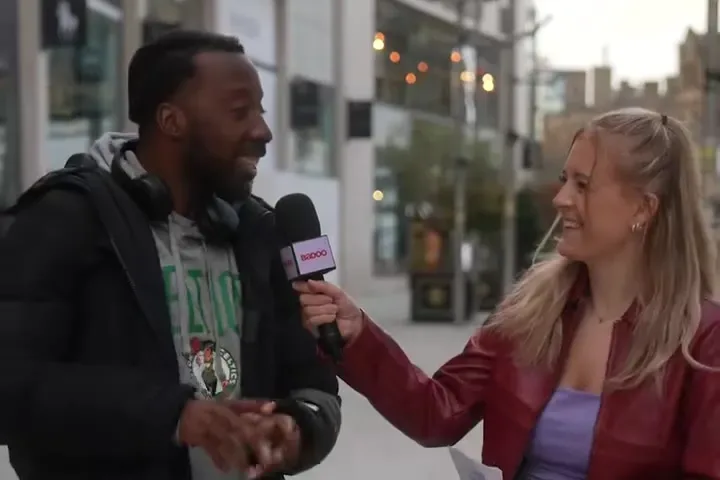
Badoo. More than 80 videos over two rounds, in 2023 and 2024, made for Badoo's own TikTok. The campaign passed 20M+ views overall, and the top video on Badoo's account alone hit 1.5M. Badoo brought us back for the second round. The Badoo case study has the details.
Netflix. Three Heartstopper quiz videos with Joe Locke for Netflix Queue reached 5,059,400 views and 675,288 engagements.
Fireball x Salford City FC. A matchday vox pop, posted on PlaysUP as a collab with Fireball UK and Salford City, passed 880,000 views on Instagram.
Why do street interviews work so well on social media?
Three reasons come up again and again. First, they look like the content people already choose to watch, so they do not trigger the instinct to skip an ad. Second, viewers play along: they answer the question in their heads and keep watching to see if they were right. Third, the answers spark arguments in the comments, which tells the platforms the video is worth showing to more people. Our piece on what makes a vox pop go viral goes deeper into the patterns.
Do street interviews work for B2B and serious brands?
Yes, when the question connects to something everyone has an opinion on. Deel sells HR and payroll software, a category few people talk about in the street. The series worked because it asked about jobs, salaries and living costs, which everyone has a view on. Heineken's agency, The Romans, used street interviews to talk about pubs and community for a draught beer system aimed at landlords, and booked us again after the first city.
When do street interviews not work?
They struggle when the brand is the first thing in the video, when the question is so leading that the answers sound staged, or when a brand makes one video and expects it to carry a whole campaign. Results build across a series, because each video teaches you which questions land. They also fall flat when the people on camera are made to look foolish. Viewers notice, and it reflects on the brand.
How do you know if a street interview campaign is working?
Look past views. Completion rate shows whether people watched to the end. Shares and saves show whether they found it worth passing on. Comments show whether it started a conversation, and what people said about the brand. For paid social, compare cost per thousand views and click-through against your other creative. Our guide to how to measure a street interview campaign covers the numbers to agree before you film, and our brand content page explains how we plan a series.
The short version
Street interviews work for brands that want attention and conversation on social media. Real campaigns have reached tens of millions of views, from 47M+ for the Great Run to 40M+ for Deel. They work best as a series built on one clear idea, with the brand kept out of the first few seconds, and judged on completion, shares and comments as well as views.
Frequently asked questions
Are street interviews effective for marketing?
Yes, for awareness and engagement on social media. Real people reacting on camera feel more believable than a scripted ad, and campaigns such as the Great Run quiz with Sir Mo Farah have reached over 47 million views.
How many street interview videos does a brand need?
A series works better than a single video. Our larger campaigns range from 14 videos for Deel to 40 for Hygge and more than 80 for Badoo, because each round shows which questions land.
Can street interviews drive sales?
They work best for awareness and consideration. Paired with paid social and a clear next step, such as a contest or product page, they can send people to buy, but they are rarely the last click on their own.
How do you measure street interview results?
Track views alongside completion rate, shares, saves and comments. For paid campaigns, compare cost per view and click-through against your other ads.
Working on a campaign?
Make your brand the conversation.
Tell us what you're planning and we'll come back with ideas, formats and a quote.
Plan my campaign